









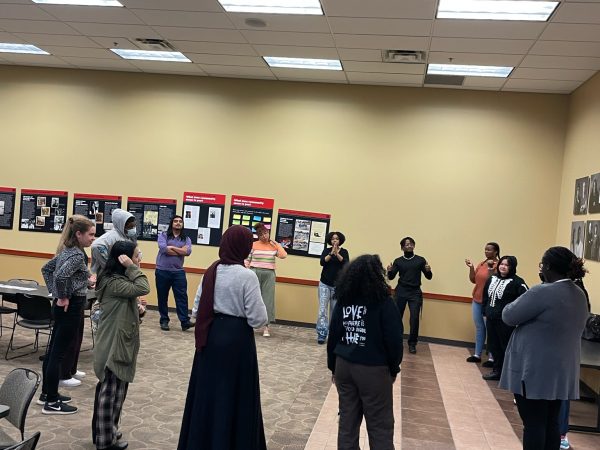
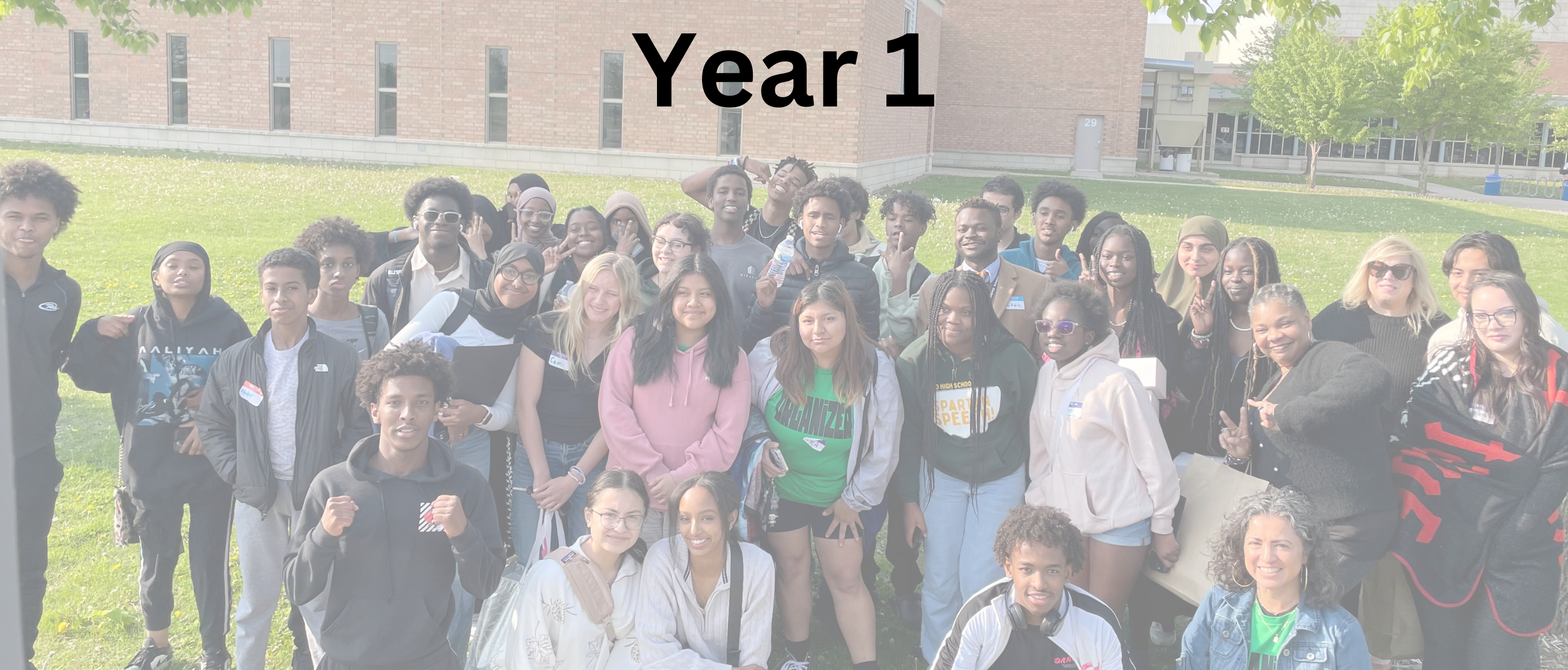

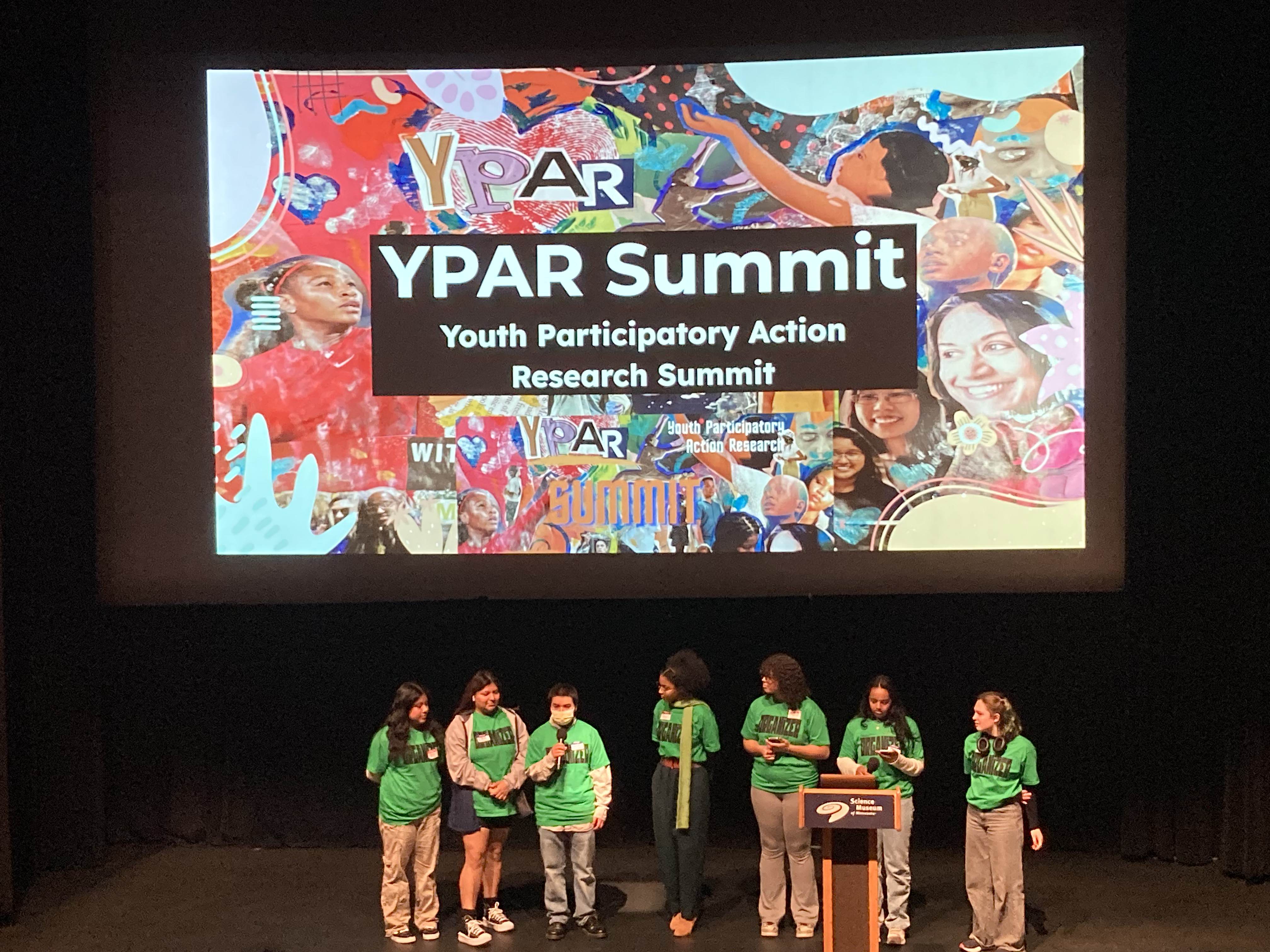
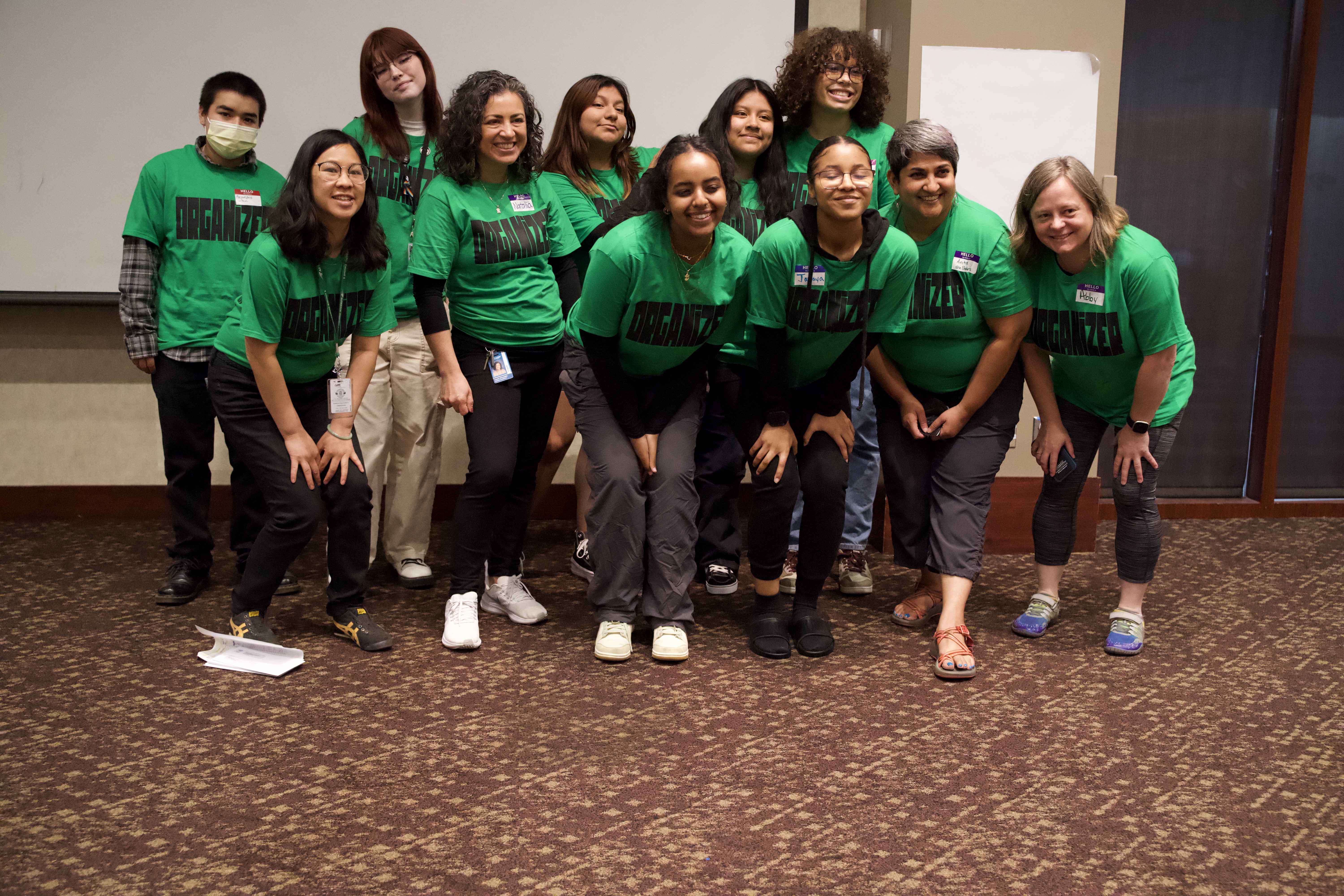


Brooklyn Center YPAR Team presentation of Brooklyn Center YPAR Team visit to the “Empowering Change at BC through Restorative Joy” Mahmoud El-Kati Ujima Library
Activities and Accomplishments
During an onboarding retreat, youth researchers were hired as district staff and taken on an off-campus retreat to be fully immersed in the YPAR experience. This interrupted the routine of the school day, allowing for authentic community building and engaging learning. Funding gave us flexible options for compensation, including gift cards and meals for focus group participants. The team is now designing times for adults and youth to build kinship and learn about restorative justice practices, a need identified through their research.The Brooklyn Center YPAR team, additional students, and district staff attended the first MN YPAR Summit. The team was able to share knowledge and projects with a broader community of researchers. For the first time, a YPAR summer internship program will be offered in partnership with YoUthROC. Six new interns will be onboarded, examine past research projects, and work with YoUthROC to develop professional development and action plans for next school year. Through this summer partnership our team developed a professional development for BCS staff that focused on merging their past research projects. It was a super fun culmination of both groups’ past work.

Brooklyn Center YPAR Team members at the YPAR Summit May 2023
Plans and Goals
A new team of researchers and Brooklyn Center adult supporters will continue to challenge other staff within the district to examine processes and modify systems designed for adults, such as the hiring process, so youth are fully supported and recognized as productive members of our district. A new youth research team will be onboarded, as many current members will graduate in June, again through the off-campus retreat. New members will support existing action projects from needs identified in school years ‘22 and ‘23, as well as conduct another full research cycle inspiring new action and professional development for staff in the district.
Activities and Accomplishments
YPAR team and facilitators worked closely with the Faribault Community School team and participants. The researchers connected with after-school participants focusing on the impact of cleanliness on learning outcomes and achievement gaps.
YPAR Site Council Presentation
YPAR student researchers presented to the Faribault Middle School site-level teacher leadership team with a collaborative discussion following. Teachers were interested in the “FMS Clean Up” and “Prayer Time” policy that the students put together. FMS Principal Stacy Fox tasked herself with looking into potential schedule changes that would accommodate longer prayer time. Students traveled to the Science Museum to take part in student-centered discussions around YoUthROC work and YPAR models/experiences. Students were able to observe and learn about other students’ cultures and community practices. Students presented their research to friends, family, and FMS staff members on May 30, 2023.
Plans and Goals
In Fall 2023, the YPAR group will finish their spring research and give a final presentation to district staff. In spring 2024, a new group of students, representative of the general student body, will learn the objectives and parameters of the YPAR model. They will attend an orientation led by previous YPAR researchers that will aid them in their study of the impact of cultural competency and knowledge among staff. They will strive to prove that this affects overall student wellbeing and learning. This research will be presented to district staff and absorbed by district professional development opportunities.

Faribault Middle School YPAR Team
Activities and Accomplishments
During the first year, we were able to organize a group of high school students to explore school environments and what helps them learn. We examined the following inquiry question: How do we build rich, affirming, learning environments in content-area classes? We started our work with the following questions: What would you hope students can experience? What are your hopes and dreams? What are ways to learn? From the youth answers, conversations, and sharing of their own experiences and their peers’, we developed questions to gather more data from peers and staff. We started the district’s process to get approval for our survey. We hope to be able to analyze the results over the course of Fall 2024 and to engage staff and students in a learning experience to address the issues of building rich, affirming, learning environments at the high school level. We are also planning to have youth co-lead professional development over the summer that addresses these topics through a course, “Race and Ethnic Studies.”
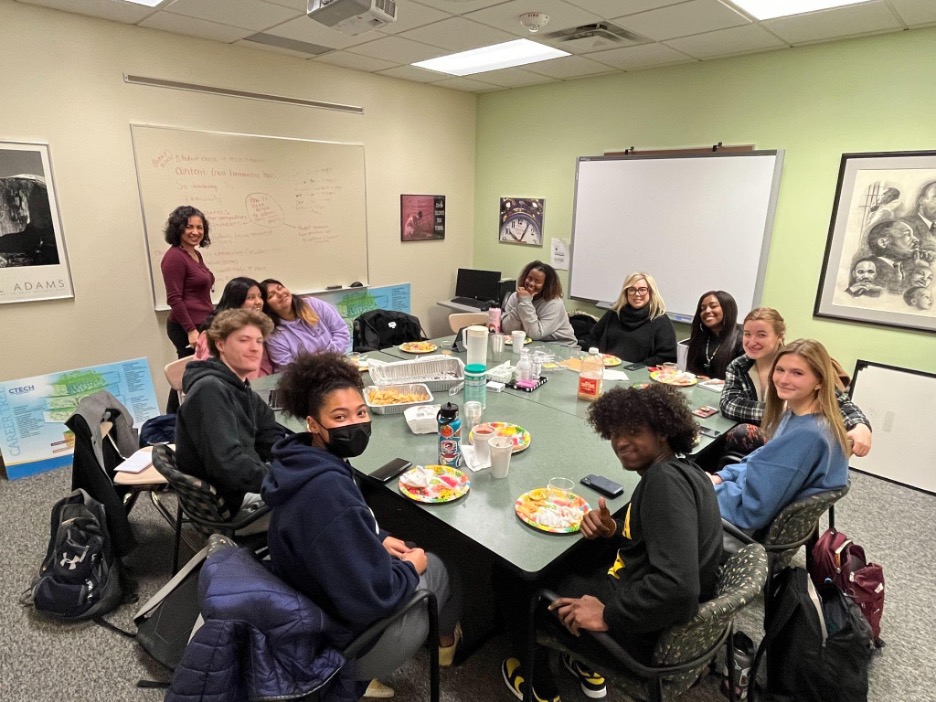
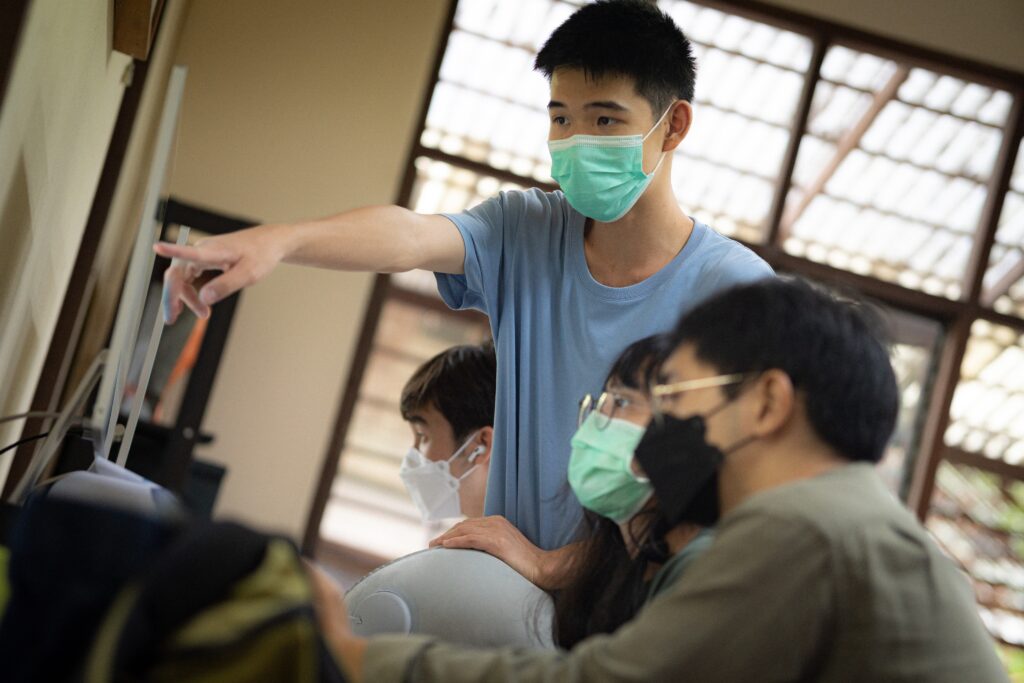
Rochester High School YPAR Team meeting
Plans and Goals
The goal for year two is to expand the work from year 1 to all four high schools: Century High School, John Marshall High School, Mayo High School, and Rochester Alternative Learning Center (ALC). We will identify staff at each site that would be willing to lead this work and work together to engage staff and students in the YPAR process and/or implementation of the work of students for year 1. Our goal is that this work will strengthen a sense of belonging and community, which is an area of growth based on district’s data at our secondary schools. Through this work, we also hope to build student and teacher capacity to have courageous conversations in classroom settings. This work will help support multidirectional learning by putting students at the helm of educators’ professional learning.
Activities and Accomplishments
The YPAR project work at St. Anthony Middle School happened through classes and clubs under the direction of teacher Alison Criss. Alison and two high school students facilitated a YPAR Summit planning meeting. Alison and the two students were part of the organizing team for May’s MN YPAR Summit.
Plans and Goals
Because the YPAR at St. Anthony was interrupted by adult leaves of absences (illnesses, maternity leave), the site will use carry-forward funds from Year 1 to continue building their capacity for YPAR during Year 2.
Activities and Accomplishments
We held a Youth Data Analyst (YDA) internship with five St. Louis Park High School students in the summer of 2023. The interns met periodically between June 21st and August 17th, 2023. During that time, interns reviewed literature, shared lived experiences, reviewed district data, developed research questions, collected and analyzed data and reported their findings along with recommendations to stakeholders. The internship culminated with an in-person presentation to over 100 staff of St. Louis Park Schools and was well received. District staff are currently working on developing their annual improvement plans, based on the interns’ recommendations. The main research question of this summers’ work was “How have teacher-student relationships affected student experience since 2020?” Abby Rombalski (adult advisor for YoUthROC) and two YoUthROC alumni members led the internship as subcontractors. The YDA team also presented their work to several local academics and community members, including Dr. Anita Chikkatur, the grant PI. In addition, a group of 2022 interns presented their work at the LEAD conference at the University of Minnesota in August. Dr. Silvy Un Lafayette received an award from Cheryl Broadnax Award for Innovation and Result from StriveTogether for her work with the YDA program.
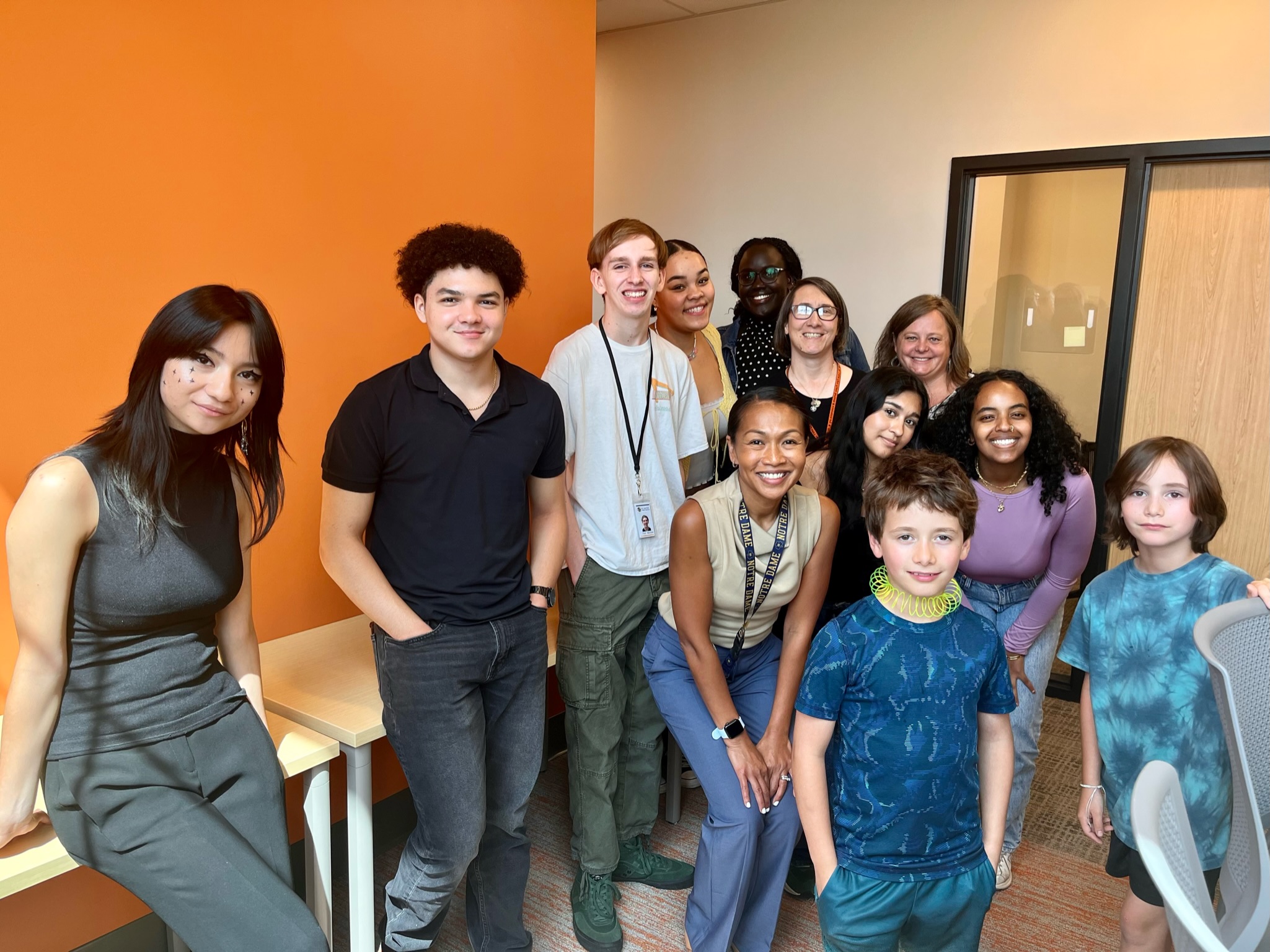

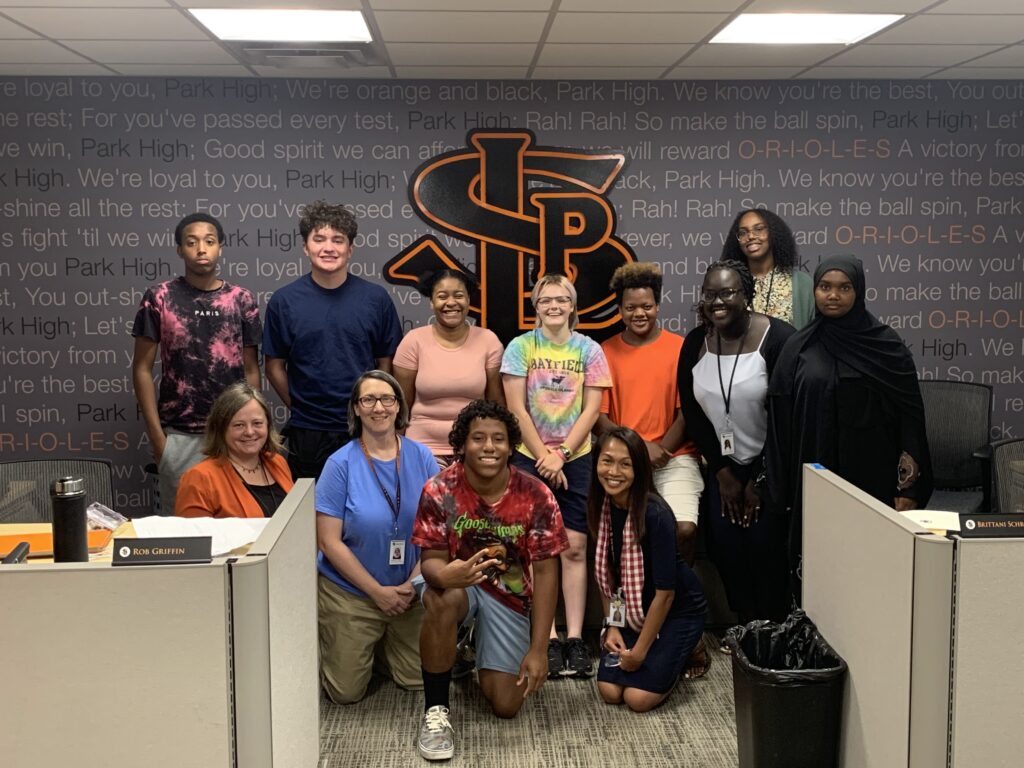
Summer 2023 Youth Data Analyst interns 2023 Youth Data Analyst team presentation from St. Louis Park High School
Activities and Accomplishments
- Reading: We read Bettina Love’s work about spirit murder and it informed our work.
- Research Practice: We learned from each other’s leadership and facilitation skills, and developed our skills with the team’s support. As we progressed through our project, we honed in on our definitions and methods after each event, informing/improving the next event; we prepared a research methods workshop with revised and clarifying questions, examples from previous data, and reflection activities; we ensured that our research methods reflected the values of our topic, experiencing joy and not just talking about it.
- Facilitation: We developed the Youthful Joy research methods workshop to connect and unite youth in the community, hear their reflection on youthful joy, and help other communities grow as much as they allowed our team to grow (BC Baddies, South High All Nations Program, our UROC northside workshop, and the YPAR summit). We held debriefs with a feeling of accomplishment after successfully facilitating events and workshops. We were able to attend the Minnesota YPAR Summit and share our information with an even larger audience and connect with youth across our state to get feedback and spread even more joy.
- Summer work included a deep partnership between YoUthROC and the BC Baddies, using the conceptual frame of both groups to put together an invited educator Professional Development session that jump started a “Restorative Joy” cohort. (See photos above under Brooklyn Center’s YPAR team.)
Plans and Goals
We plan to pursue a new research topic that is meaningful, productive, adaptive, and reflective of past years’ work; to continue to cultivate a strong team community, friendship and kinship as a foundation; to create a safe and welcoming team for all members; to embed kinship and community engagement throughout the year; to build relationships with the community and researching with youth; to make our research project helpful and useful to the community, including in social action; and build theater into the team’s project (ex: theater of the Oppressed, Augusto Boal and dance with Averie Mitchell-Brown). Year 2 partnerships in formation include a continued partnership with Brooklyn Center’s YPAR team and possible partnerships with youth in Brooklyn Center’s ARISE program, South High’s All Nations program, and with Girls in Action based out of north Minneapolis. Ongoing product work includes the Youth in Social Movement website and the Restorative Joy handout for educators.




In the first year without any of the original YPAR team members, our team reassessed our network of support and built community through sessions with other student-led groups that grounded us in the political education needed to advance research. This year’s team asked, “How does staff engagement come together to shift towards their community responsibility as educators?” The team did field observations in high school and middle school classrooms, held focus groups with high school students, administered surveys with students and staff, and interviewed licensed staff. We will spend our summer analyzing data to inform a professional development session during Welcome Week in the fall.
At the middle school, 17 YPAR students met 65 times over the school year, identifying topics that have a significant impact on interactions among peers throughout the school day: 1) bullying’s effects on students’ physical and mental health, and 2) how facility needs directly impact student learning and positive experiences.
YPAR participants addressed these topics in various ways. Activities facilitated by former YPAR participants included large-group discussion, mind-mapping exercises, and scavenger hunts through the school to identify areas of concern and opportunities. The team also worked on projects to showcase their and fellow students’ interests and ideas.
Faribault is exploring expanding YPAR to the high school for Year 3. A Youth Data Summit with 22 high school students this spring was focused on youth-selected themes such as school policies on attendance, cell phone usage, suspensions, social media, bullying, and school activities. Youth reviewed current school and district policies and analyzed data on these key areas. This time provided a great opportunity for youth voices to be heard among school and district administrators (many of whom attended). As a direct result, the high school principal committed to actively involving youth in a summer task force with teachers and other stakeholders to review grading policies.
At the district level, youth worked on a World Language articulation project to determine needs in the World Language Department. Youth were an integral part of the work, identifying research topics such as program development and evaluation, community engagement, student engagement and supports, instructional strategies and authentic learning, credit consistency and post-high school opportunities, cultural experiences and global perspectives. They developed and distributed a survey to gather information from students, parents, and teachers and then used the data to develop recommendations to the school board.


Within an Advanced Spanish/Heritage Spanish class, the YPAR framework was used to identify issues affecting student participation in extracurricular activities. Starting with the Latine population’s low graduation rates and informally observing that few Latinos participated in sports and clubs (which they documented by looking through yearbooks) Students looked at research that connects participation in extracurricular activities with higher graduation rates, and identified reasons why Latine people didn’t participate in extracurriculars. Students designed a survey of students to identify obstacles, with the goal of disaggregating the information in the data by racial/ethnic demographics. Students presented their preliminary findings to the guidance counselors and administrators at Mayo High School and proposed administering the survey.


We used Robin Wall Kimmerer’s “Braiding Sweetgrass” to introduce students to indigenous ways of knowing, a critical theory and methods of research. Groups chose research topics from the 17 UN Sustainability Goals, examining impacts on our global and local communities, then used critical theory and YPAR methodology to analyze the root causes of their issue, consider the views of various stakeholders and those most impacted, conduct an action research project, and reflect on their impact and intent using a solidarity spectrum. Students disseminated their learning in a variety of ways, including artwork, stories, poetry, podcasts, fundraisers, websites, games, and a community celebration where they presented their research and projects to families and other district stakeholders.


St. Louis Park Public Schools launched its fourth cohort of Youth Data Analyst (YDA) interns. In the summer of 2023, we hired five high school students to work as YDA interns in our Assessment, Research and Evaluation Department. Using an intergenerational model, the YDA interns were taught by a University of Minnesota instructor (Abby Rombalski) and her research assistants, who were graduate students of color. The research question that interns collaboratively studied was “How have teacher-student relationships changed since 2020?” (the first year of YDA). The 2023 cohort evaluated the impact of the first three cohorts’ research project and the recommendations made to the school district as a result of those projects. Research and data from YDA continues to be at the center of our school district’s continuous improvement planning process, used by school principals and district leaders to guide district-wide professional development planning. This summer, YDA interns from 2023 will be presenting at the U of M’s LEAD Conference.
The YoUthROC team developed two professional development sessions with the Brooklyn Center Community Schools’ High School YPAR team and their YPAR Coordinator, Amina Smaller. One session was a “Restorative Joy” cohort for teachers in summer 2023. A January 2024 session disseminated the BCCS YPAR team’s research to their school district’s Board of Directors. In addition, Abby Rombalski submitted two articles based on partnership work with St. Louis Park’s YDA program; they are currently under review with The High School Journal and the Michigan Journal of Community Service-Learning. For the core YoUthROC team, Year 2 included the development of a partnership with the U of M’s Youth Studies Internship Program and with Augsburg University’s Bonner Leaders Program. These partnerships enabled additional community youth to be hired to the team. The core team this academic year included 1 UMN Youth Studies Intern, 2 other UMN undergrads, 4 Augsburg students (including 2 recent grads from Brooklyn Center’s YPAR team), 4 students from Camden High School (Minneapolis), and 1 additional northside high schooler. YoUthROC co-founders Amina Smaller (BCCS YPAR Coordinator) and Shaunassey Johnson were co-facilitators in spring 2024. The YoUthROC team and director Abby Rombalski held one community-engaged YPAR Series session in fall, one in winter, and two in spring. This brought northside Minneapolis young people from four local schools and organizations together for research events centered on a guiding question: What are the hidden messages that are taught (or learned) in our urban schools? After reviewing literature about hidden curriculum, the team used three methods to learn more: a community mural, participatory spectrum activities, and short interviews. After initial analysis, the YoUthROC team alongside community youth worked on power mapping and shared feedback about next steps, which will include a community asset mapping process in the third year.
This year the Brooklyn Center YPAR team had several new members and they spent time grounding in a solid understanding of how systems, including schools, work. They explored their own identities using activities and games that helped students get comfortable talking about themselves. The team reviewed their research and analysis from the previous year and how the problem of health and wellness should be the center of their focus. The students did initial observations and live surveys in the cafeteria to understand how students are entering conversations about health and wellness. They used these observations and survey results to develop interview questions for older students about their habits around health and wellness. The team read articles and watched a film about health and wellness. Students went on to design a survey for all Brooklyn Center middle and high school students asking questions about their backgrounds, how they view and participate in different parts of wellness culture and more. The team analyzed the data using YoUthROC’s cluster, code, claim, and repeat method. Once data analysis was completed, the students began discussing the idea of a student wellness takeover day.
From the Team:
With grant funds, we planned a student wellness takeover day for our middle and high school students that was implemented in October. We wanted a day that will allow students to take a break from school work and engage with different topics around health and wellness for their mind, body and spirit. From our research, we observed that there was a lot of negative energy cycling through our school community. Energy was low because practicing wellness is not the norm and all of our bad habits impact the whole community. After interviewing students and conducting surveys with students, we decided to plan something that would impact all students and staff. We learned that sleep deprivation, lack of access to healthy food, substance abuse and lack of knowledge around wellness were some of the main issues among students in our community. The wellness day will be a time for students and staff to learn together and receive tools and skills to care for themselves and one another.
This past summer, four District Youth Council members from Faribault High School had the opportunity to launch a new YPAR project. Two of the four youth were also part of a new pilot class called Peer Group Connection (PGC), a peer mentorship program for incoming 9th graders. The student leadership team developed surveys and conducted a focus group to gather data and viewpoints on the 9th graders’ experiences. Ashlan Zurbriggen (Youth Engagement Coordinator) trained the youth to use YPAR to collect insights and demonstrate the immense value of a peer mentorship program in a school setting.
The YPAR group plans to present its findings to the school board, school administration, and potentially during Falcon Support Time (scheduled academic support). Overall, the group has observed a positive shift in school climate and culture, which they attribute to the peer mentorship program. Ultimately, the students hope that the administration and school board will recognize the program’s value, allowing the PGC class to continue after the two-year grant expires at the end of the 2025-2026 school year.
This year’s grant funding was also used to implement part of an action plan for a previous YPAR team at the middle school. Based on recommendations from their YPAR team in Spring 2022 to create a space where students could take a break when experiencing a stressful moment in a classroom, this year’s YPAR team at the Faribault Middle School decided to design such a room. The school used their funds for this year to create that room and to carry out this action portion of their research plan for this year that also builds on the research done by the previous YPAR teams. Their plan was inspired by the work done by the YPAR team at Brooklyn Center (Rombalski et al., 2023).


The YPAR Grant provided an opportunity for Rochester Public Schools educators and students to engage in solution-oriented projects to address issues that students worked on in different settings. The grant funded four main activities:
- Students attended a symposium to share the results of their work. They joined other youth from different parts of Minnesota in a youth symposium and spent the day presenting and learning from other groups’ action projects. Topics youth groups from Rochester included: Facing Dyslexia and Advocating for Student Support; Removing Barrier to Extracurricular Participation to Support Graduation Rate; Preserving German and Latin; and Creating an Affinity Spaces for students.
- Professional learning opportunities for Rochester Public Schools teachers and educators to learn about YPAR and how to embed it in classroom settings and at schools. The grant funded reading materials for learning and subs for teachers to attend the training. The training focused on getting grounded in the principles of Youth Participatory Action Research (YPAR), active/empathetic listening, asset mapping, and investigating root causes. This fall, teachers included YPAR as the core activity in a new leadership class at John Marshall High School.
- Youth YPAR training was designed for students this fall prior to school starting during a non-school day. The session, co-faciliated by PI Anita Chikkatur and YoUthROC member Laichia Vang, covered the core principles of YPAR, Asset Mapping, the Research Process, Sharing your Findings, Power Mapping, and Collective Knowledge Building. Students from our different high schools had an opportunity to come together and learn in community. This was powerful since students from our different high schools do not often have an opportunity to come together and learn from each other. This laid the foundation for students to begin to think how to tackle some of the issues they had identified in their respective school clubs and classes.
- Youth training on “how to deliver an effective message” facilitated by Samuel Hawkins. The training focused on developing Effective Presentations, including tips for presenting individually and in a group, and designing effective slides. It also included using creative methods to elevate their message, specifically Spoken Word and Visual Arts.
We are excited to continue working with students on YPAR and supporting our teachers to carry this on. We continue to plan more professional development opportunities and support requests from students who are inspired to study different issues in their community and find solutions as changemakers.


Using the framework of “knowledge to action” provided by World Savvy, all of the 8th graders learned about participatory action research, including about a range of research methodologies, through field trips and engagement with local knowledge holders. In small groups, the students chose a topic that was pertinent to them, their school, and/or their community and that aligned with the United Nations sustainable development goals. The 68 projects examined a range of topics such as clean lakes, healthy habits, endangered animals and disengagement at school. The students presented their work to family and community members at a capstone symposium on May 29, 2025. The United Nations Association of the USA, Minnesota Chapter, featured a story about this work.

During the summer 2025 internship, Youth Data Analyst (YDA) interns at St. Louis Park, under the guidance of Silvy Lafayette, Executive Director of Assessment, Research and Evaluation (ARE) for St. Louis Park Public Schools, engaged in a collaborative research project aimed at studying the school district’s Teacher Development and Evaluation (TDE) Rubric to inform school improvement plans across the district. These projects were student-led and involved analyzing district data, with findings shared with an audience of 100+ staff at the district’s Data Advance event in August. Interns also had the chance to collaborate with a University of Minnesota-Twin Cities faculty member and three college students who served as Research Assistants. This nine-week program, starting in June, encouraged students to extend their research through the 2025-26 academic year based on their interests.
Throughout the internship, YDA interns participated in regular meetings, both virtually and in-person, where they were introduced to new concepts and collaborated on analyzing aggregate district data. They were expected to complete weekly reading assignments, focusing on diverse perspectives to enhance discussions on learning opportunity gaps. Interns were also responsible for submitting weekly journal entries, which served as a critical reflection tool in the research and data analysis process. These entries allowed for creative expression and critical thinking, without a stringent focus on grammar or punctuation. Prior to their final presentation, interns also had a chance to present their research to faculty at Carleton College, the University of Minnesota-Twin Cities and Michigan State University. They also presented their work to an audience of family members and close friends where their own communities could hear about the work they completed over the summer. 

RESEARCH DESIGN
In 2024-2025, the YoUthROC Research Team asked, who are we (and our work) accountable to? How can schools better serve students? Where do students feel supported? What assets in our community should be uplifted? How can we connect these resources to schools? These questions sprung from work in 2023-2024 that ultimately asked, how do we pour into intentional spaces to nourish youth and our whole communities? However, the team learned that to first address this question, we needed to identify “intentional spaces” or community assets in North Minneapolis. Due to YoUthROC’s past years of research, we understood that there are an abundance of assets and resources in North Minneapolis, yet they are often unknown or not integrated into schools. Therefore, to address this concern, there was a need to document assets of North Minneapolis, in particular for middle and high school-aged youth. Thus, the team dedicated time to community asset mapping, to learn about youth-serving spaces (YoUthROC, 2022). We hope that through this work, schools and organizations can better nourish and sustain places aimed at supporting youth.
The largest list of resources was first compiled based on what YoUthROC members knew or had experienced. We then conducted additional online searches to explore and gather other assets. In addition, in community engagement activities throughout the year (including with the Brooklyn Center YPAR team), the team asked other participants about resources. Thus, it is not an exhaustive list, but it’s one relevant to the team. YoUthROC created a spreadsheet, a website, and a zine. This website, known as North Navigate, allows for digital accessibility and easy viewership, whereas a zine can amplify and spread awareness to young people and youth-adjacent adults that this resource exists.
In addition, the YoUthROC Research Team began to create another resource in the form of physical flashcards detailing personal stories from real people in the community. This was a way to humanize experiences with community spaces in order to be a resource to others. It provides another way for communities to interact with the knowledge collected by the team. At the end of the summer of 2025, YoUthROC began outreach initiatives by tabling, putting posters in hotspot North Minneapolis areas, passing out zines at Back to School events, and giving posters and zines to middle schools, high schools, and colleges to share with students. YoUthROC also presented at several high school classrooms to showcase and engage students in learning and using North Navigate.


